Decision making and problem solving
Your boss asks "so, what do you recommend?" A feeling is not an answer. Neither is "the AI said so." This course gives you the tools to choose, and to explain why you chose what you chose.
Who it is for: anyone who makes decisions at work and has to defend them: analysts, managers, founders, consultants.
★ 4.6 on Udemy · 3,274 ratings · 8,641 students

What you will learn
- 01
A case study to start
The Baltimore stockbroker, and why a good result is not proof of a good decision.
- 02
Why we decide the way we do
Narrow framing, loss aversion, uncertainty aversion, System 1 and 2, the halo effect, utility, and Netflix's HR as a case.
- 03
Key techniques, part 1
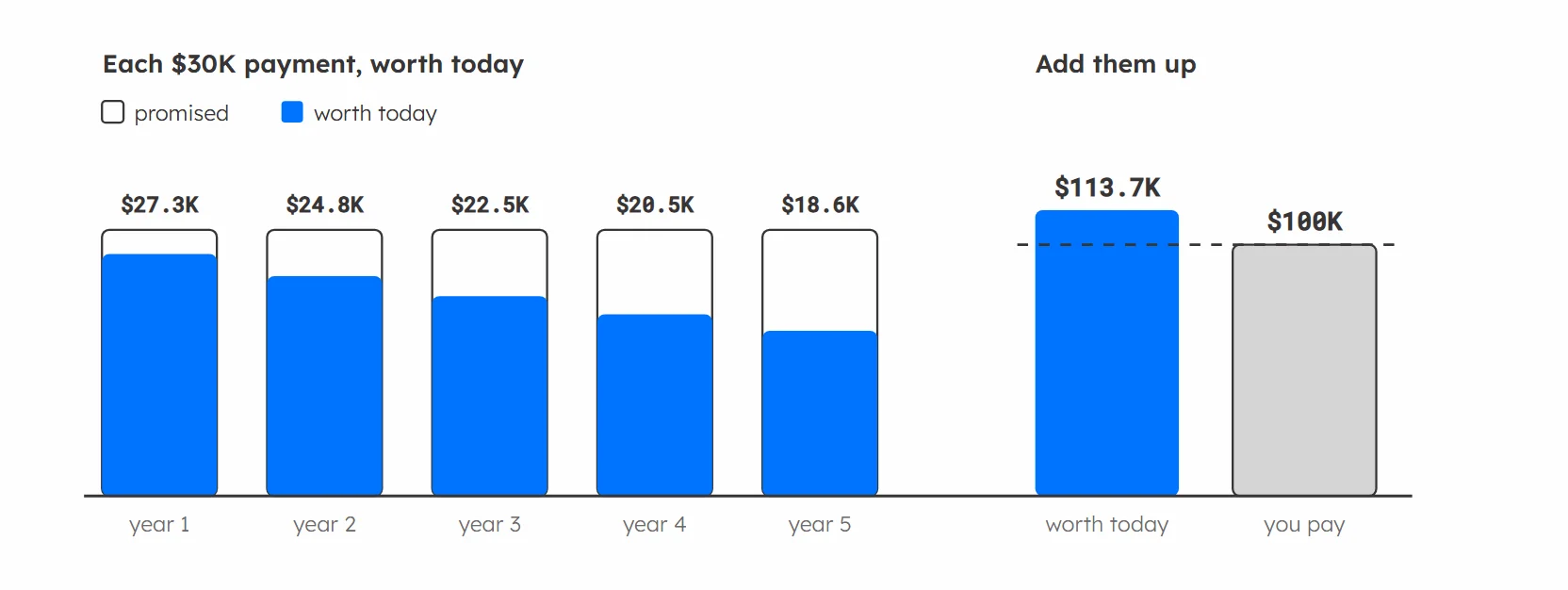
ROI, opportunity cost, compounding, NPV and what it cannot see, sunk cost. Exercises: a coffee shop, a savings plan, and should Amazon build a warehouse in Antarctica?
- 04
Cognitive biases
Confirmation, anchoring, linear, survivorship, selection, mutual causality, the gambler's fallacy and regression to the mean.
- 05
Principles
Judge the decision not the outcome, keep it simple, decision making in the age of AI, and why diverse teams decide better.
- 06
Key techniques, part 2
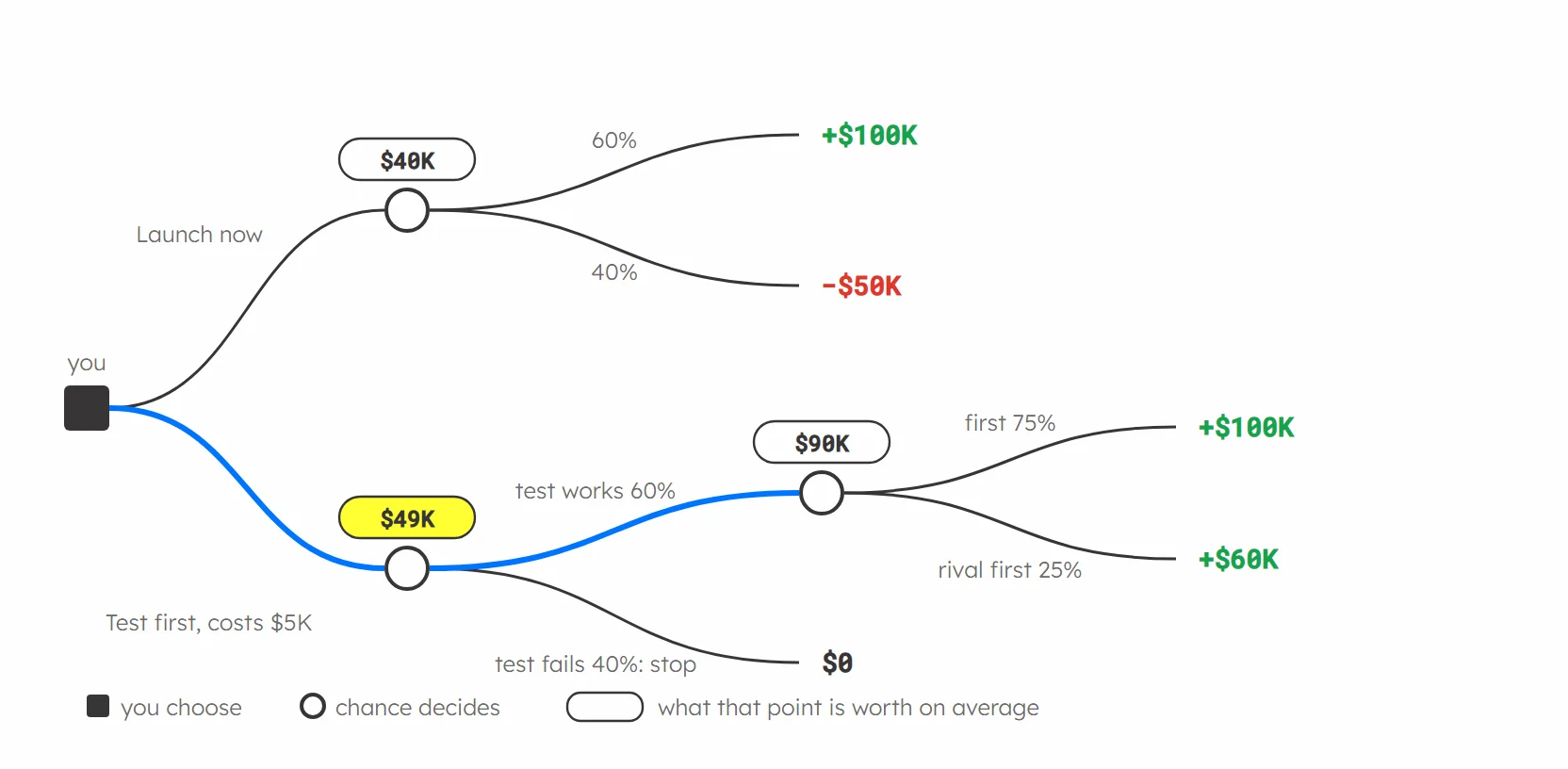
Expected value, decision trees, sensitivity analysis, decision matrices, utility, and a predictive analytics case study.
- 07
Before the spreadsheet
The Einstellung effect, first principles, inversion and the pre-mortem, second-order thinking, Buridan's donkey.

How you learn
Short lectures, exercises in Excel or Google Sheets after each tool, quizzes, a capstone project, and the free Making Decisions and Cognitive Bias graders on this site for the case studies.

Start free
Not ready to enrol?
Instructor
Diogo Alves de Resende
Over 100,000 people have taken his courses.
What students say
"Great insights, explained in a very friendly, understandable format! I loved the course and I can only recommend."
"I found the course highly beneficial, with its clear explanations and real-world examples."
"This course opens your mind to different ways to come up with the right decision. The illustrations are good."
"It was good to understand the biases because that's the biggest culprit."
"I appreciate the presenter shared his personal experience and how that shaped him."
"Thank you instructor for the clear and neat clarification."
FAQ
- Do I need maths?
- Only arithmetic. Every formula is shown step by step and used in a spreadsheet.
- Will the tools make the decision for me?
- No. They show you where the uncertainty is and what your choice depends on.
- What do I need?
- Excel or Google Sheets.